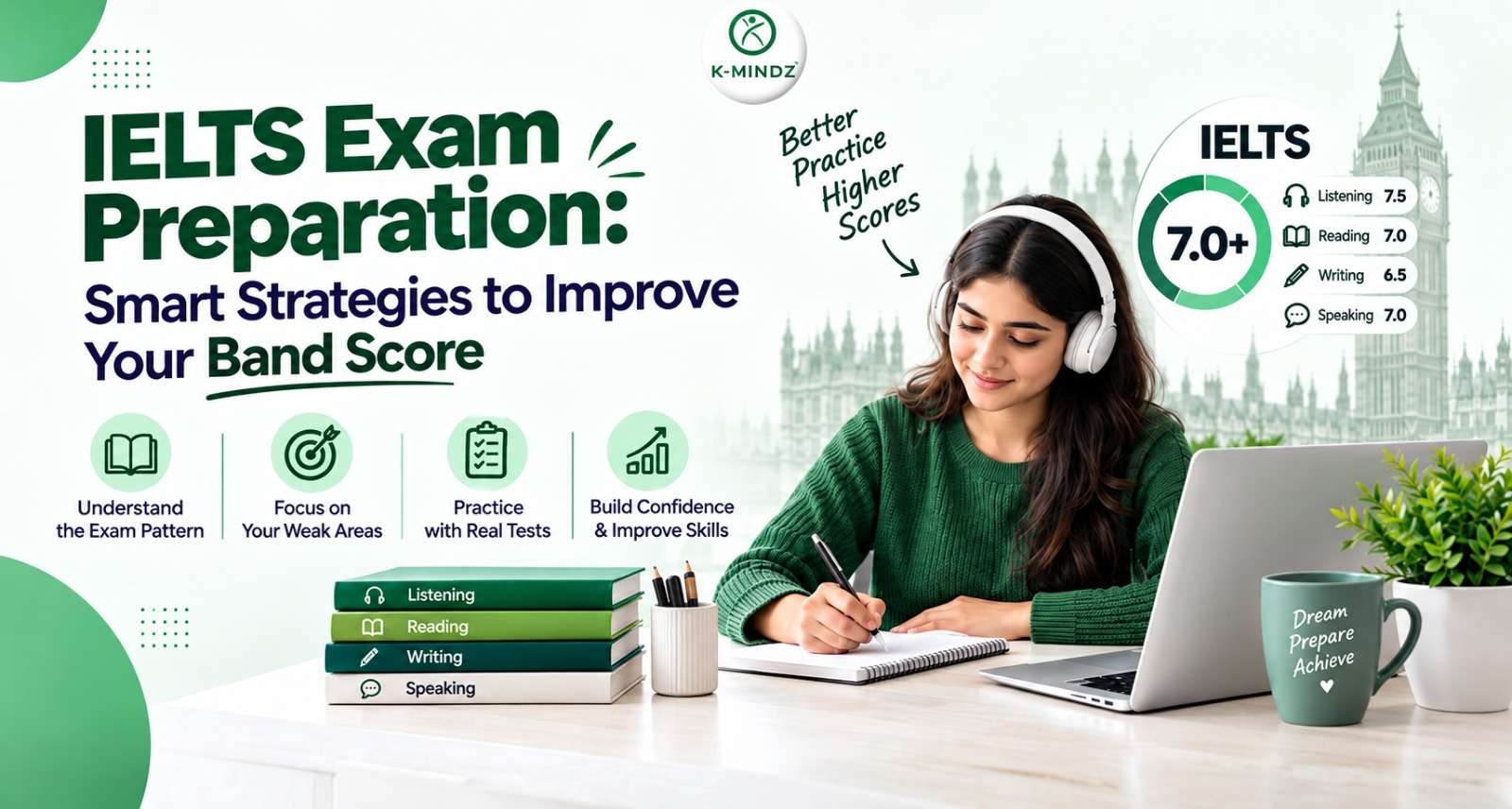
For many students, IELTS preparation starts with one simple question: “How do I get the band score I need?” Then the search begins: practice papers, vocabulary lists, videos, advice from friends, and plenty of study tips. After a while, it can become difficult to know what is actually worth following.
Good IELTS exam preparation does not mean studying every free minute of the day. It means understanding your weak areas, practicing them regularly, and knowing what you need to improve.
Know Your Target Before You Start
Before making a study timetable, decide what band score you are aiming for. Then take a practice test to see where you currently stand.
Pay attention to each section:
- Are you losing marks in listening because you miss words?
- Do you run out of time in Reading?
- Is your writing clear and well organized?
- Do you pause too often while speaking?
Once you know your problem areas, you can spend more time fixing them instead of simply doing more practice tests.
How to Prepare for IELTS Without Getting Tired of It
Studying for hours every day may sound like the best plan, but it can quickly become exhausting. A shorter routine that you can follow consistently is usually easier to manage.
Try dividing your practice across the day. You might work on reading for 30 minutes, practice listening later, and spend some time on writing or speaking in the evening.
It also helps to keep a small notebook for:
- New words and useful phrases
- Grammar mistakes you often repeat
- Difficult reading questions
- Writing feedback
- Speaking topics that make you uncomfortable
Look through your notes regularly. You will start noticing which mistakes keep coming back.
Let Your Mock Tests Show You What Needs Work
Getting a score from a mock test is only half the job. The more useful part is going through the mistakes afterwards.
Ask yourself why you got an answer wrong. Perhaps you misunderstood the question, missed an important detail, or spent too much time on one part.
Writing deserves the same attention. Check whether your ideas are relevant, your paragraphs connect properly, and your grammar and vocabulary are helping rather than getting in the way.
For speaking, record yourself occasionally. It can feel a little odd at first, but listening back can help you catch repeated words, long pauses, and unclear sentences.
Make Speaking Practice Feel More Natural
Many students become nervous when they think about the Speaking test. They try to memorize long answers or use difficult words they would never normally say.
Instead, talk about familiar subjects. Discuss your studies, hobbies, family, favorite places, travel plans, or a recent experience. The more regularly you speak, the easier it becomes to organize your thoughts in English.
If you choose online IELTS coaching, look for classes where you get enough time to speak and receive personal feedback. Simply listening to a trainer will not improve your speaking on its own.
Find Support That Matches Your Learning Style
Some students are comfortable preparing independently. Others need a trainer, a fixed schedule, and someone to point out mistakes. If you fall into the second group, an IELTS study center can give your preparation more structure.
Before joining a course, check whether it provides:
ü Experienced trainers
ü Regular mock tests
ü Speaking practice
ü Writing corrections
ü Personal feedback
If IELTS is part of your plan to study overseas, an Agency for Studying Abroad can also help you understand the language requirements and other parts of the application process.
Do Not Choose a Course Just for a Promise
IELTS Guaranteed 7 Bands Coaching may sound attractive when you have a particular score in mind. But no coaching program can do the exam for you. Your preparation, practice, and performance still matter.
Rather than focusing only on a guarantee, find out what the course actually offers. Good coaching should help you understand your mistakes, practice the right way, and become more confident over time.
Your Score Improves One Small Step at a Time
There is no secret formula for getting a higher IELTS score. It usually comes down to regular practice, honest feedback, and working on the mistakes you keep making.
Give yourself enough preparation time, follow a routine that suits you, and do not let one poor mock-test score discourage you.
With focused IELTS exam preparation, you can enter the exam feeling more familiar with the format and more confident about your answers.
Kmindz Education is here to help you prepare for IELTS with practical guidance, regular practice, and the support you need.
Leave a Reply